The answer to what can’t go in the trash when moving includes chemicals, fuel, batteries, electronics, medicine, paint, and some large items. Sort these items early, keep unsafe products apart, and use approved drop-off, donation, recycling, or collection options before moving day. Local rules in Augusta may differ.
Moving can create more waste than expected. A home may have old cleaners, broken devices, extra paint, worn furniture, and half-used products. These items cannot all go into a curbside bin.
A safe clearing plan protects your household, waste workers, neighbors, and the environment. It also helps keep the move on schedule. Augusta Georgia Movers can help homeowners, renters, and business owners move the items they are taking while they plan what should stay behind.
Table of Contents
- What can’t go in the trash when moving?
- Which household chemicals and flammable items are not allowed in the trash?
- Can electronics, batteries, and light bulbs go in the trash?
- What should you do with paint, medicine, and other special waste?
- How should you dispose of furniture, appliances, and bulky items?
- What moving materials can be recycled or reused?
- How can you create a final move-out disposal plan?
- Frequently Asked Questions
- Conclusion
What can’t go in the trash when moving?
Items that may not belong in regular trash include hazardous chemicals, fuel, batteries, electronics, medicine, paint, and some large appliances. The right choice depends on the item and the local waste rules in Augusta and across Georgia.
Why disposal rules matter during a move
Trash trucks and sorting sites are made for normal household waste. A leaking cleaner, lithium battery, fuel can, or propane tank can cause fire, fumes, or spills. Putting these items in a moving box does not make them safe.
A product marked flammable, toxic, corrosive, reactive, or poisonous needs extra care. The label often gives storage and disposal advice. If the label is missing, the container is damaged, or the contents are unknown, keep it separate until a local waste office gives clear instructions.
Do not pour chemicals into a sink, toilet, storm drain, or bare ground. Do not mix products to make them easier to discard. Some cleaners can react and release harmful gas.
How to sort items before packing
Start with one room at a time. Make four groups: take, donate or sell, recycle or special disposal, and regular trash. Keep the special-disposal group in a cool, dry place away from children, pets, heat, and food.
Use the original container when possible. Keep labels facing out, and never put chemicals in drink bottles or food containers. Do not tape different products together. If an item leaks, do not touch it without guidance. Contact the local hazardous-waste program or emergency service if there is immediate danger.
A simple label on each group can prevent mistakes. Check city, county, and state waste pages because rules differ. Augusta Georgia Movers can help Augusta residents focus on the move while they arrange proper handling for items that are not traveling.
Which household chemicals and flammable items are not allowed in the trash?
Many household chemicals and flammable items should not go into regular trash. Common examples include gasoline, kerosene, propane cylinders, lighter fluid, strong drain cleaners, pesticides, weed killers, pool chemicals, and some car fluids.
Examples of hazardous household products
A product does not need to look dangerous to need special handling. Common examples include:
- Paint thinner, turpentine, and solvent-based cleaners
- Gasoline, diesel fuel, kerosene, and camping fuel
- Propane tanks, butane canisters, and other fuel cylinders
- Pesticides, herbicides, and insect sprays
- Pool chemicals, drain openers, and strong oven cleaners
- Motor oil, brake fluid, antifreeze, and other car fluids
Aerosol cans may also need special rules, especially when they are full or partly full. Fire extinguishers, flares, and pressurized containers should not go into a trash bag. Some empty containers may follow other rules, so check the label and local program.
Safer options for preparing and disposing of chemicals
Keep hazardous products upright and in their original packages. Place them in a sturdy box only when local instructions allow it. Do not carry chemicals in a passenger area, and do not leave them in a hot vehicle.
Many communities have household hazardous-waste programs or special collection events. The U.S. Environmental Protection Agency explains household hazardous waste and lists products that need special care. A local waste office can explain accepted items, drop-off times, and transport rules.
You do not need a professional mover for basic sorting or label checks. A leaking, unknown, or highly reactive product is different. Keep people away and ask trained local authorities for instructions. Professional movers should not carry unsafe chemicals unless the service and law clearly allow it.
Can electronics, batteries, and light bulbs go in the trash?
Many electronics, batteries, and bulbs should not go into regular trash. Devices may contain useful metals, fragile screens, or materials that need controlled recycling. Batteries can also start fires when crushed in collection trucks.
How to handle computers, televisions, and small devices
Before recycling a computer, phone, tablet, or smart device, back up needed files and remove personal accounts. Erase personal data using the maker’s guidance. Take out removable memory cards and check whether the device has a built-in battery.
Televisions, monitors, printers, routers, game systems, and small appliances may be accepted at an electronics recycling site. Some stores, makers, charities, or local programs accept certain devices. Rules can change, so check before loading the car.
Large screens need careful packing because broken glass can injure people. A Furniture Movers crew may help move a heavy television or appliance safely, but the recycler must confirm that it accepts the item. A moving company cannot decide that an unwanted device belongs in the trash.
Where batteries and bulbs may need to go
Tape the ends of loose lithium, rechargeable, and car batteries when local guidance calls for it. Keep damaged, swollen, hot, or leaking batteries away from other items. Do not put them in a box with metal tools, keys, or loose coins.
Some stores and recycling centers collect household batteries, fluorescent tubes, compact fluorescent bulbs, and high-intensity lamps. LED bulbs may follow different rules. Never crush a fluorescent tube, and keep bulbs in a box that prevents breakage.
The EPA provides information about electronics donation and recycling. A safe plan includes data protection and waste handling. The goal is not just to clear the home quickly. It is to keep dangerous items out of the trash stream.
What should you do with paint, medicine, and other special waste?
Leftover paint, medicine, and personal-care products need separate choices. The best option depends on the product, its condition, and the local program that accepts it.
Disposing of leftover paint and renovation materials
Usable paint may be donated, given away, or saved for the new owner when the label is clear and the paint is in good condition. A reuse group, paint program, or local transfer site may accept it. Never combine different paints in one container.
Liquid paint should not be poured down a drain or placed in a trash can unless local rules say it is ready for disposal. Some programs accept paint directly. Others give instructions for drying small amounts of water-based paint. Oil-based paint often needs a hazardous-waste option.
Paint thinner, stain, varnish, adhesive, grout sealer, and roofing products may need the same care as other chemicals. Keep cans closed and upright. Do not leave them by the curb without confirmed collection instructions.
Handling medications and personal-care products
Expired or unwanted medicines should go through an approved take-back program when available. The FDA explains safe medicine disposal. Follow the package label and program instructions. Do not flush medicine unless official guidance permits it.
Creams, shampoos, cleaners, and aerosols can have different rules. A nearly empty container may be handled differently from a full one. Keep prescription information private and remove personal labels only when the disposal program allows it.
A moving crew can pack normal bathroom items, but it should not guess about special waste. A renter can ask the landlord or property manager about paint, chemicals, and shared collection sites before leaving. This can prevent last-minute problems and keep unsafe items out of a hallway or dumpster.
How should you dispose of furniture, appliances, and bulky items?
Furniture and large appliances should usually be donated, sold, reused, recycled, or collected as bulky waste. They should not be forced into a small bin or left beside the road without permission.
When donation, resale, or reuse makes sense
Clean, safe furniture may help another household. Good choices include donation centers, reuse groups, consignment shops, community programs, and direct sales. Take clear photos, list damage honestly, and confirm whether the recipient can collect the item.
Searching for how to get rid of old furniture can show several options. A donation pickup near me may work for usable items, but each charity sets its own rules. Some will not take stained mattresses, damaged upholstered pieces, broken desks, or furniture without needed parts.
Selling furniture works best when the item is listed early. Giving it away may be faster when the move date is close. If a piece is unsafe, infested, badly damaged, or wet, donation can create a problem for the next person.
What to do with mattresses, appliances, and damaged furniture
Mattresses, box springs, refrigerators, freezers, washers, dryers, and air conditioners often need special collection. Refrigerants, oils, and other parts may need trained handling. Ask the local waste provider or appliance recycler before moving the item.
Bulky waste rules may include appointment times, size limits, preparation steps, or separate pickup days. Never place an appliance at the curb until the provider confirms it is allowed. Remove refrigerator doors only when local safety rules require it and the item can be handled safely.
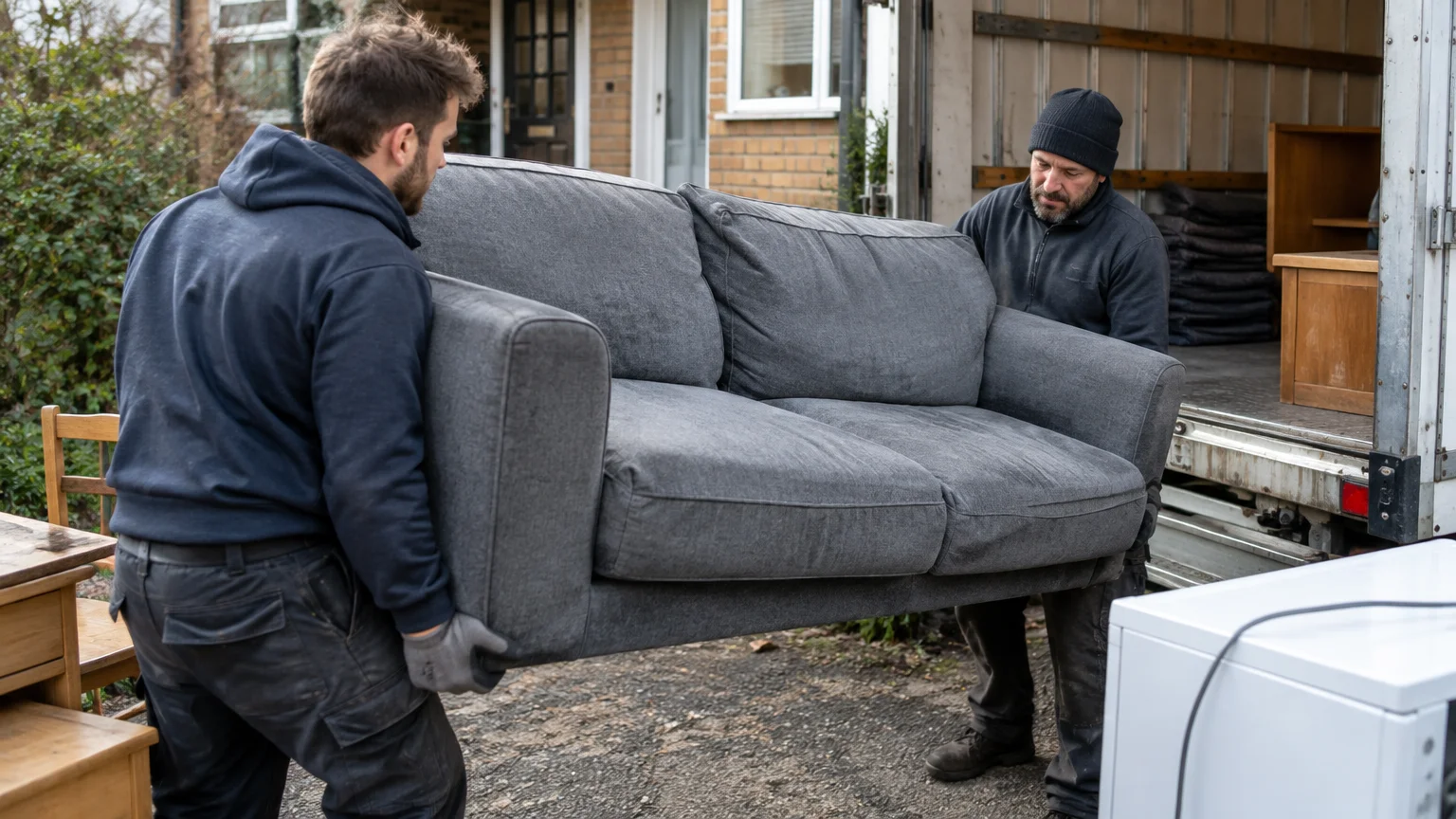
A homeowner can sort, clean, measure, and photograph furniture without professional help. Heavy lifting is different. Furniture Movers or Loading & Unloading Help may reduce injury risk when a large item must leave a home, apartment, office, or storage unit. The disposal provider still decides where the item goes.
What moving materials can be recycled or reused?
Clean cardboard, paper, and some plastic materials can often be recycled or reused. The exact rules depend on the local recycling program, so check what the local cart accepts.
Sorting cardboard, packing paper, and plastic materials
Flatten clean cardboard boxes and remove tape when practical. Keep boxes dry and free from food, oil, and heavy dirt. Packing paper can often be reused for another move or placed with accepted paper recycling.
Plastic film, stretch wrap, air pillows, foam, and bubble wrap may not belong in a curbside cart. Some stores collect plastic film, while foam may need a special drop-off. Do not place loose film in a recycling cart because it can tangle sorting equipment.
Separate reusable supplies from damaged waste. A moving company may reuse strong boxes or packing materials when its process allows it. Tenants can ask building management about shared recycling areas, but they should not assume a dumpster accepts every packing product.
Reducing waste before moving day
The easiest item to dispose of is the item that never needs packing. Use suitable household supplies, return borrowed items, sell unwanted goods early, and donate useful pieces before boxes fill the home.
Keep a small box for reusable tape, labels, scissors, and packing tools. Mark boxes with fragile items, but avoid putting chemicals, batteries, or medicine in normal moving boxes. This keeps the loading team from handling an unsafe mix.
A local move may still create many disposal choices. In the main Augusta area, residents from Country Club Hills and Fairview Gardens to North Augusta, Belvedere, Clearwater, Beech Island, and nearby communities can ask local programs about recycling, bulky waste, and special drop-off sites. Planning early helps avoid rushed choices and extra trips.
How can you create a final move-out disposal plan?
A final disposal plan should start several weeks before the move and end with a last safety check. It should name each item, its destination, the deadline, and the person responsible for handling it.
A practical timeline for sorting and scheduling disposal
Start by walking through every room, closet, garage, shed, attic, and office. Check cabinets and shelves for cleaners, fuel, paint, batteries, medicine, and old devices. Write down anything that needs a special program.
Next, confirm local rules and book collection or drop-off times. Then give away, sell, donate, or recycle items with a clear destination. Leave time for another plan if the first charity or recycling site cannot accept an item.
During the final week, keep special waste away from packed household goods. Confirm appliance and bulky-item arrangements. On moving day, check behind doors, inside cabinets, and around outdoor storage areas.
A final walkthrough should answer three questions: Is anything unsafe left behind? Is each scheduled item ready? Has the home been cleared without using an unapproved dumpster or drain? Tenants should also follow lease rules and leave the property as required.
Key takeaways for clearing out what you are not taking
- Do not place chemicals, fuel, batteries, electronics, medicine, or paint in ordinary trash without checking local rules.
- Keep unknown, leaking, or damaged products separate and ask trained local authorities for help.
- Donate, sell, reuse, or recycle usable furniture and moving materials before disposal.
- Confirm bulky-item, appliance, mattress, and electronics collection before moving day.
- Use a room-by-room list so nothing unsafe is packed, dumped, or left behind.
Augusta Georgia Movers serves customers across the Augusta area with moving help for homes, apartments, and offices. The team can help with careful packing, loading, transport, furniture handling, and unloading while the customer follows local disposal rules.
Frequently Asked Questions
Can everything left after a move go in a dumpster?
No. A dumpster may not accept chemicals, batteries, electronics, paint, medicine, propane cylinders, tires, or appliances with special parts. The provider sets the rules. Read the rental terms and ask before loading questionable items. A separate special-waste area is safer than sorting through a full dumpster later.
How do movers handle items that cannot travel?
Movers usually handle items included in the agreed moving service. They may not accept hazardous materials, perishable goods, or unsafe containers. The customer should sort these items before loading day and arrange donation, recycling, collection, or hazardous-waste drop-off separately.
Is it safe to leave old furniture at the curb?
Only when local rules allow it and proper collection has been arranged. Some cities require an appointment, while others limit size or item type. Usable pieces may be better for donation or resale. Broken, wet, or infested furniture may need a special disposal route.
Can a person throw away old batteries during a move?
Loose rechargeable and lithium batteries should not go into ordinary trash. Tape exposed ends when advised, keep batteries away from metal objects, and use a local battery collection point. Swollen, leaking, hot, or damaged batteries need special guidance rather than normal drop-off.
What is the safest way to clear a home before movers arrive?
Sort items early into take, donate or sell, recycle or special disposal, and ordinary trash groups. Confirm local rules for chemicals, paint, medicine, electronics, and bulky goods. Keep unsafe items away from children, pets, heat, and packed belongings until an approved program accepts them.
Conclusion
Knowing what can’t go in the trash when moving helps protect people and keeps move-out day organized. Chemicals, batteries, electronics, medicine, paint, appliances, and bulky goods often need another path. Early sorting gives each item a safer destination and leaves the moving crew with a clear load.
For help with the move itself, Contact us to discuss packing, loading, furniture handling, transport, or unloading with Augusta Georgia Movers.
If you are not sure what you are dealing with, it is worth having someone look at it before it turns into a bigger job. Get in touch with Augusta Georgia Movers today and we will tell you where you stand.