Opening a box after a move to find chipped plates is frustrating—and avoidable. Here’s the short answer to how to pack dishes: use double‑wall dish boxes, wrap each item snugly in ink‑free paper or foam, stand plates and bowls on edge, fill all gaps, cap the box with top and bottom cushioning, and keep weight under 40 pounds. This simple, repeatable method works just as well for a cross‑town move in Augusta as it does for a longer haul.
Augusta Georgia Movers helps households and offices move fragile kitchenware safely every week. The step‑by‑step plan below mirrors proven pro habits so you can choose the right supplies, wrap efficiently, build sturdy boxes, and load in a safer order. By the end, you’ll be ready to pack a full kitchen without stress.
Key Takeaways
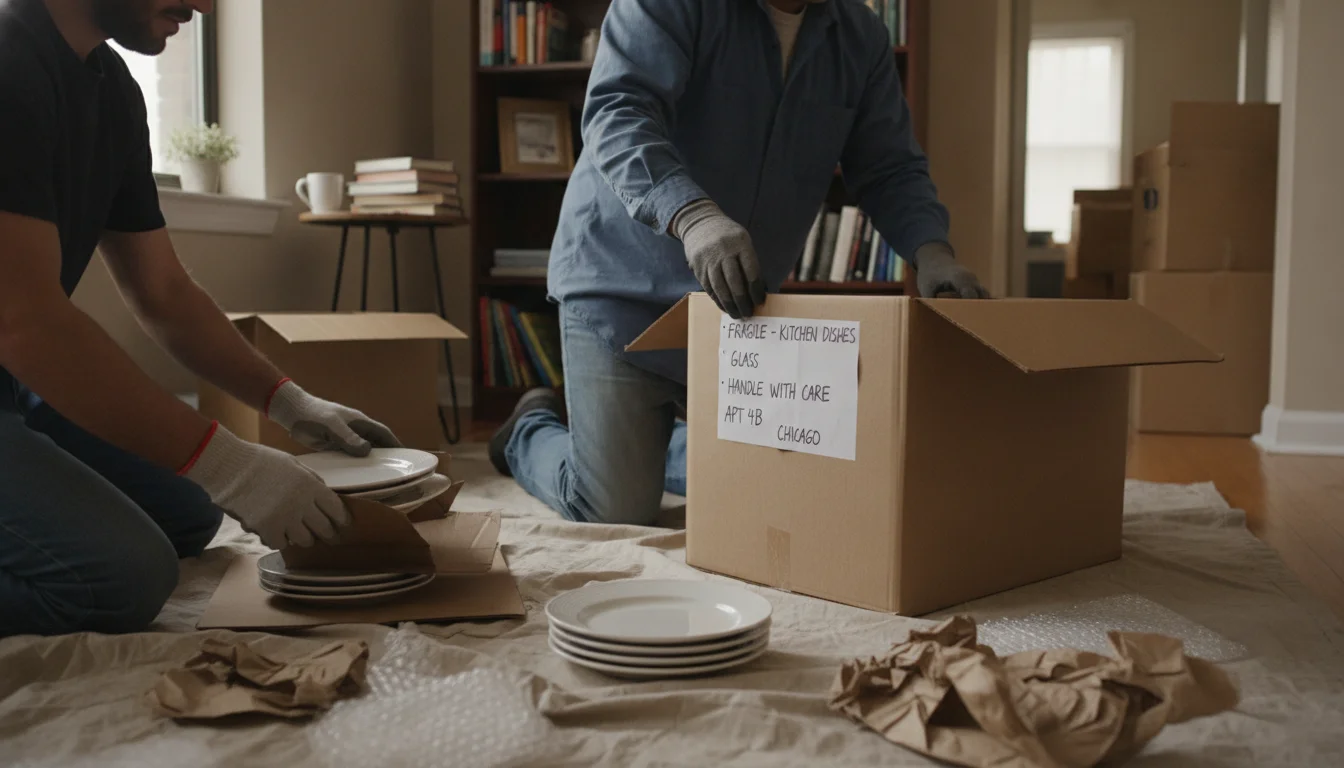
- Use double‑wall dish boxes and keep each one comfortably under 40 pounds.
- Wrap plates and bowls tightly and place them on edge; use dividers for glassware.
- Pad the bottom and top of every box and fill all voids so nothing rattles.
- Label clearly on multiple sides with room, contents, and FRAGILE/THIS SIDE UP.
- Load dish boxes on the vehicle floor and unload them first at the new place.
Table of Contents
- Gather the right supplies for dish packing
- Prep your kitchenware before you wrap
- Wrap dishes the right way for shock protection
- Build smarter boxes that won’t collapse
- Label, inventory, and insure your fragile boxes
- Load and transport to minimize risk
- Unpack efficiently and avoid common mistakes
- Frequently Asked Questions
- Key takeaways
- Conclusion
Gather the right supplies for dish packing
A solid pack starts with the right tools. A dish box is a double‑wall moving box—two cardboard layers that absorb bumps far better than standard single‑wall cartons. Use these for plates, bowls, mugs, and glassware.
Essential materials checklist
You need dish boxes, packing paper, foam sheets, and bubble wrap. Packing paper is ink‑free, soft paper that cushions and resists scratching. Foam sheets are thin pads for plates and bowls. Bubble wrap protects sharp edges and delicate stems. Add cardboard dividers for glassware, strong packing tape, and fragile stickers. A marker helps you label each side. A small scale or bathroom scale keeps weight in check. A box cutter trims dividers and tape cleanly. Keep a soft towel or two for quick void fill—any soft material that fills empty space so items don’t shift. If you prefer help with materials or setup, Augusta Georgia Movers can supply guidance or full Packing Services.
What to skip and why
Skip grocery store boxes. Many are weak, damp, or have pest residue. Avoid newspaper—ink can transfer and stain dishes. Thin gift tissue as the only wrap tears easily and gives little cushion. Steer clear of worn tape that peels. Don’t mix dishes with heavy pantry cans; a sudden stop can crush the bottom layer. These skips reduce risk and make your pack smoother.
Prep your kitchenware before you wrap
Good prep makes wrapping faster and neater. You’ll touch each item once, wrap it, and place it—saving time and keeping sinks and counters clear.
Declutter and group by type
Start with a quick edit. Pull chipped mugs and plates you never use. Donate or recycle what you won’t move. Group by type and size: dinner plates, salad plates, bowls, mugs, wine glasses, and serving pieces. Make a small “first‑night” set—two plates, two bowls, two cups, and basic cutlery you’ll unpack first. Grouping keeps wrap sizes consistent and boxes balanced. You can also stage a “fragile only” area so helpers don’t drop in heavy items.
Clean, dry, and stage a safe packing zone
Wash and dry every piece. Moisture trapped in paper can warp or smell. Clear a counter or table and cover it with a clean towel to prevent scratches while you wrap. Place your box on a chair next to you so you lift less. Tape the bottom with an H‑tape seal—one strip along the center seam and one along each edge seam. Add a layer of crumpled paper two inches deep on the bottom to absorb shakes. Place stacks of paper and foam within reach. Keep trash and donate bins nearby. In a small Augusta kitchen, use the table as your main station and rotate boxes in and out to keep pathways clear.
Wrap dishes the right way for shock protection
Wrapping prevents movement and spreads impact. Each item gets a snug shell before it goes into the box. The goal is zero rattle.
Plates and bowls: the bundle-and-vertical method
Lay a foam sheet, then a plate, then another foam sheet. Add up to four plates of the same size in one stack. Wrap the stack tightly in packing paper. Tuck the paper edges like a gift so no corners poke out. Place stacked plates on their edge in the box. Vertical placement spreads impact along the rim instead of the face. Add a row, then fill gaps with crumpled paper so rows don’t touch. For bowls, nest two to three with foam between, then wrap the nest. Set them on edge too. Heavy serving bowls go on the bottom layer over the padding. Lids get their own wrap and stand on edge beside their pot or dish. This bundle‑and‑vertical method lowers breakage and lets you work faster.
Glasses, mugs, and stemware: stem and handle support
Glasses and mugs need extra care where they’re weakest. Start with a crushed paper nest inside the cup to support the base. For handles, wrap a small paper roll around the handle first. For stems, wrap the stem with a strip of bubble, then the bowl with paper. Slide each item into a divider cell. Dividers blunt side hits and keep pieces from clinking. If a glass is very thin, double wrap it and add a foam sheet around the bowl before it goes into a cell. Place heavier mugs low and lighter stemware above. Don’t stack glasses inside each other. If you hear a clink when you gently shake the wrapped item, add more paper until it goes silent.
Build smarter boxes that won’t collapse
A strong box protects even when the road gets rough. The structure matters as much as the wrap. Take a minute to build each one correctly.
Cushioning, layering, and dividers
Start with two inches of soft paper or foam at the bottom as a shock pad. Create layers by weight: heavy plates and casserole dishes on the bottom; medium bowls and mugs in the middle; light glasses and plastic lids near the top. Slide in divider grids for glassware. If a divider leaves gaps, bridge them with strips of cardboard so cells stay snug. Fill every void with crumpled paper or towels; voids let items shift and collide. The top layer needs a final two‑inch cushion before you close the box. Press down gently—the lid should meet without force. If not, remove one item and place it in a new box. Overstuffing crushes the walls and can lead to collapse.
Sealing and weight limits per box
Close the flaps and use the H‑tape seal on top. Run your hand along seams to feel for give. Add a second strip if needed. Keep each dish box under 40 pounds. This limit protects wrists and backs and helps the box stay rigid. If you don’t have a scale, use a “lift test.” You should be able to lift the box without strain and set it down without a thud. If it feels dense or the sides bulge, split the load. Tape two handles of reinforced tape on the sides for easier grip, but never cut hand holes into the box—those weaken the wall.
Label, inventory, and insure your fragile boxes
Clear labels save time on move day and at the new place. A simple inventory helps if you need to file a claim for damage later.
What to write on each side
Write three things on at least two opposite sides and the top: the room, the contents, and a bold FRAGILE / THIS SIDE UP note with arrows. Use dark, legible ink. Add “Open First” to your first‑night dish box. Put the label on the side you’ll see when it’s stacked in the truck. If you live in Augusta and share elevators or hallways, clear labels also guide helpers who may not know your layout. Color tape can help—blue for kitchen, red for fragile. Keep it simple so anyone can follow.
Simple inventory methods that save time
An inventory is a list of what’s in each box. The fastest way is a box number on the label and a note on your phone with the number and highlights inside. Example: “Kitchen 4: dinner plates (8), salad plates (6), mugs (6).” Snap a photo of the top layer before you seal the box. Photos help if you need to document packing quality later. If you use a moving company, ask about valuation coverage. Valuation is a mover’s coverage option for loss or damage, not the same as home insurance. For high‑value sets, note brand and pattern. Keep receipts in a folder with your move papers. Augusta Georgia Movers can explain valuation options and what to note on your inventory when you’re planning a move.
Load and transport to minimize risk
How you load matters. Smart loading turns careful packing into a safer ride. Think about weight, pressure points, and how boxes move in a turn.
Where dish boxes go in the vehicle
Place dish boxes on the floor of the truck or van. Floor placement provides a flat, stable base with less sway. Keep them off stacks and away from toolboxes or heavy furniture edges. Build a tight wall with other fragile boxes so nothing can slide. Use straps to lock the wall. If using a car, place dish boxes on the rear floor behind the front seats. Avoid the trunk where things slide. For multi‑stop routes in the Augusta area, load dishes last so they come off first and spend less time in motion.
Carrying and handoff tips for helpers
Lift boxes from the bottom with both hands and keep them close to your body. Don’t carry two fragile boxes at once. Announce stairs and turns out loud. Pass boxes level to the next person so contents stay upright. Never toss or slide a fragile box across the floor. If rain is likely in Augusta, keep a plastic tote or trash bags at the door to cover the top and protect labels. If you hired Local Movers in Augusta or Packing Services in Augusta, show them your label system so they can place boxes in the right room fast.
Unpack efficiently and avoid common mistakes
Unpacking dishes well keeps your new kitchen calm and safe. A plan helps you avoid a sink full of paper and broken glass.
Safe order of operations in the new kitchen
Start by cleaning shelves where dishes will go. Open the “Open First” box and set up a day‑one kit: two plates, two bowls, two cups, and dish soap. Next, unpack plates and bowls since they’re used most. Then do mugs and glasses. Lay a towel on the counter to catch stray bits of paper. Unwrap over the towel so any chips don’t scratch counters. Put foam between stacks on shelves if roads are rough where you live. Recycle paper as you go so it doesn’t pile up. Keep a small box for re‑use if you plan a return trip.
Mistakes to avoid (and quick fixes)
Don’t stack plates flat in the box—keep them vertical. Don’t leave voids; fill gaps so items can’t move. Don’t mix heavy pots with delicate glass; keep heavy low and fragile high. Don’t rush labels; vague labels cause stress later. If you forgot dividers, cut strips from an extra box to make simple cells. If a box got damp, unpack and dry items right away. If you find damage, take photos before you throw out wrap. Then file a note with your mover. Furniture Movers in Augusta and Long Distance Movers in Augusta can also advise on placing dish boxes away from pressure points when loading large pieces like hutches.
Frequently Asked Questions
How do you pack plates so they don’t break?
Wrap plates in foam and paper, stack 3–4 by size, then place them on edge in a double‑wall box. Add two inches of padding below and above, fill gaps so nothing shifts, and keep the box under 40 pounds. Label FRAGILE and THIS SIDE UP on multiple sides.
What is the best way to pack glasses and mugs?
Create a paper nest inside each glass, wrap handles or stems first, then the body. Slide each piece into a snug divider cell. Fill any gaps with crumpled paper. Keep heavier mugs low, lighter stemware high, and avoid nesting glasses. Shake gently; if you hear a rattle, add more wrap.
Can I use towels instead of packing paper for dishes?
Towels work for extra padding, but they aren’t a full replacement. They can shift and leave gaps. Use ink‑free packing paper or foam as the main wrap, then add towels to fill voids or protect edges. Keep towels clean and dry to avoid odors on dishes after the move.
How heavy should a dish box be?
Aim for a max of 40 pounds. That keeps the box rigid and protects wrists and backs. If you don’t have a scale, use a lift test. The box should rise without strain and the sides should not bulge. When in doubt, split one heavy box into two lighter ones.
Where can I get the right boxes for dishes?
Look for double‑wall dish boxes and glass dividers at moving supply stores or from Local Movers in Augusta. Avoid grocery boxes because they can be weak or damp. You can also rent moving boxes if you prefer reusable options that arrive clean and ready to pack.
Key takeaways
- Use double‑wall dish boxes and keep each under 40 pounds.
- Wrap tight and pack vertical for plates and bowls; use dividers for glass.
- Pad all sides and fill gaps so nothing moves in transit.
- Label every side with room, contents, and FRAGILE/THIS SIDE UP.
- Load on the floor of the truck and unpack in a set order.
Conclusion
Packing dishes is a system, not a guess. With the right supplies, a clean setup, snug wraps, and smart labels, your kitchen can travel safely and arrive ready to use. Augusta Georgia Movers serves homes and offices across Augusta and nearby communities and can help with planning, supplies, and packing for local and long‑distance moves. If you’re unsure how to pack a tricky item or choose the right materials, ask for guidance before you start. Contact us.
If you are not sure which of these you are dealing with, it is worth having someone look at it before it turns into a bigger job. Get in touch with Augusta Georgia Movers today and we will tell you where you stand.